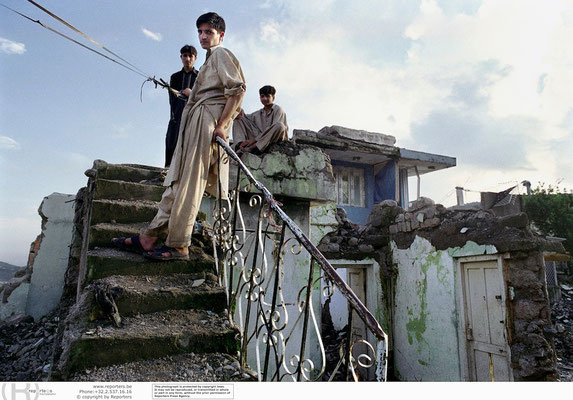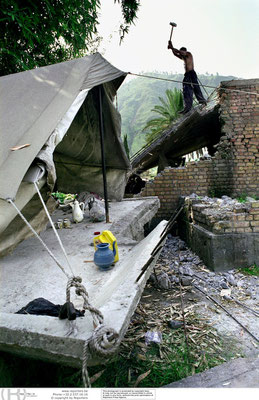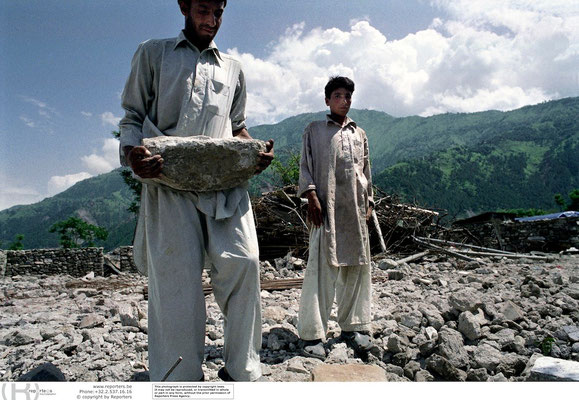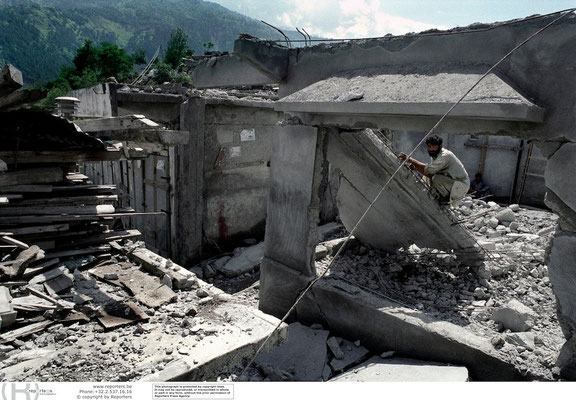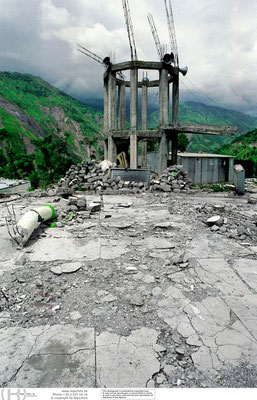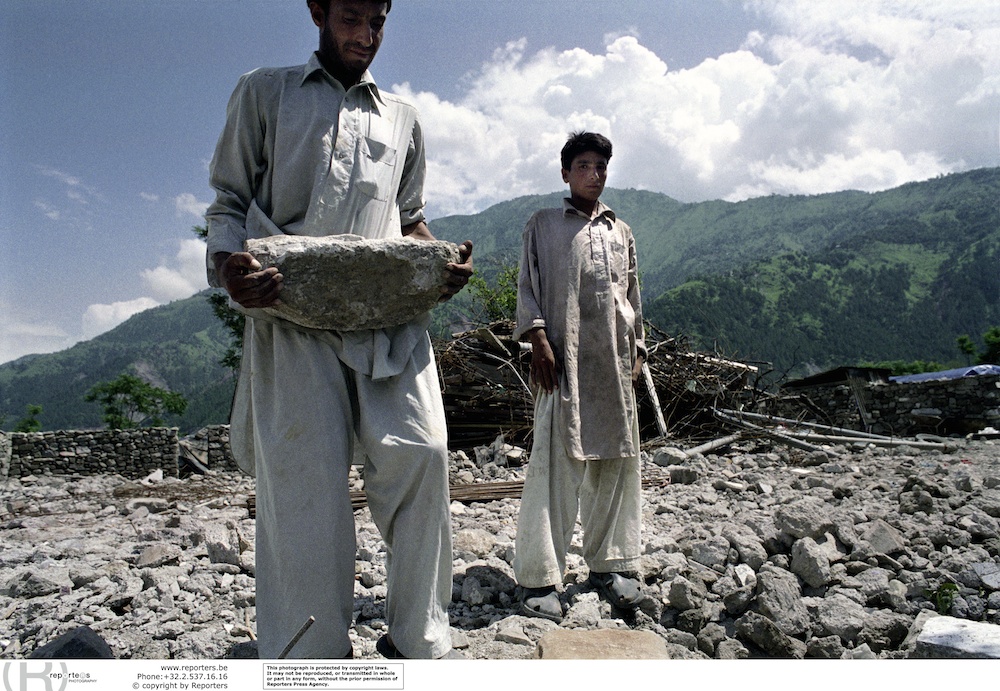
An earthquake of 7.6 made Kashmiris refugees on their own land.
(Pak. ad.) Kashmir
The 2005 Kashmir earthquake destroyed homes, schools, and lives. Thousands were left to survive in winter shelters, facing loss, trauma, and inequality
After the Earthquake: Kashmir, Pakistan
The earthquake devastated entire districts, villages, and cities, leaving 85,000 people buried in rubble for months.
Schools and poorly constructed concrete buildings, often built with corruption and negligence, collapsed in seconds, claiming the lives of over 45,000 children.
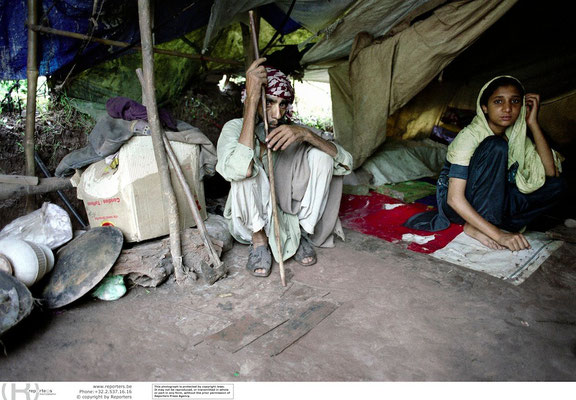
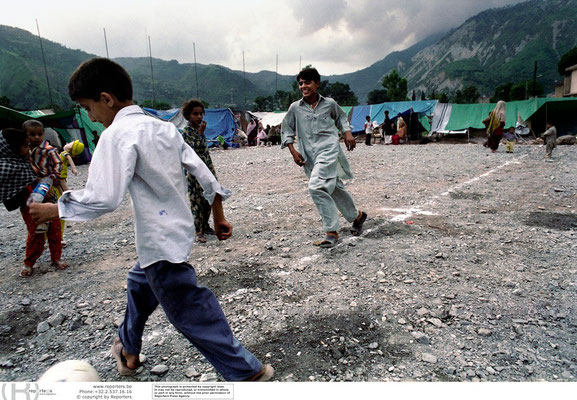
The slow response from the central government and the army forced survivors to endure the harsh Kashmiri winter in tents and temporary shelters. Social structures were shaken, and even amid this natural disaster, aid disproportionately reached the wealthiest, leaving the most vulnerable struggling to survive.
The disaster revealed the fragility of infrastructure and the inequalities that shaped who could survive and who could not.