Via Dolorosa, the human way of the cross
(Eastern) Jerusalem
In Jerusalem, the Via Dolorosa, or “Way of the Cross,” traces the path Jesus is believed to have taken — from the place of his imprisonment, through his trial, the long ascent to the hill of crucifixion, and finally to his grave. In Christian belief, it embodies the suffering of Jesus to redeem humanity.
Today, the route winds through the busy streets of the Old City, from the Muslim Quarter to the Church of the Holy Sepulchre in the Christian Quarter — a site of profound significance for all three Abrahamic faiths.
Pilgrims arrive from across the world to walk in Jesus’ footsteps. For some, often travelling from remote places, this journey is a once-in-a-lifetime act of devotion. Others return repeatedly. Along the way, Christians pause at the fourteen stations of the Cross and other sacred sites mentioned in the Scriptures, performing rites and prayers shaped by their own cultures and traditions.
In a globalised world of leisure, the Way of the Cross also draws tourists, attracted by its history and symbolism. Some are touched by deep spirituality, others approach with curiosity or superficial interest.
Believers, pilgrims, tourists, friars, nuns, and priests from every nation walk the same ancient stones, creating a striking intersection of modern life and sacred tradition.
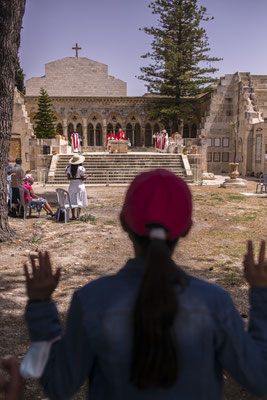
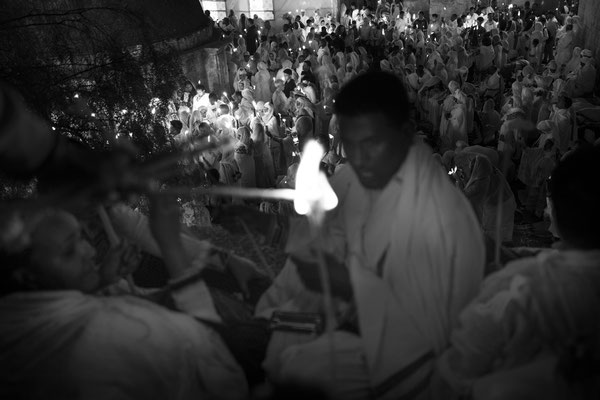
The photographic project Via Dolorosa — The Human Way of the Cross seeks to document this humanity at the crossroads of faith, global culture, identity, and civilisation, set against one of history’s most resonant landscapes.